
The Tupperware Problem
Emotional containment and capacity.

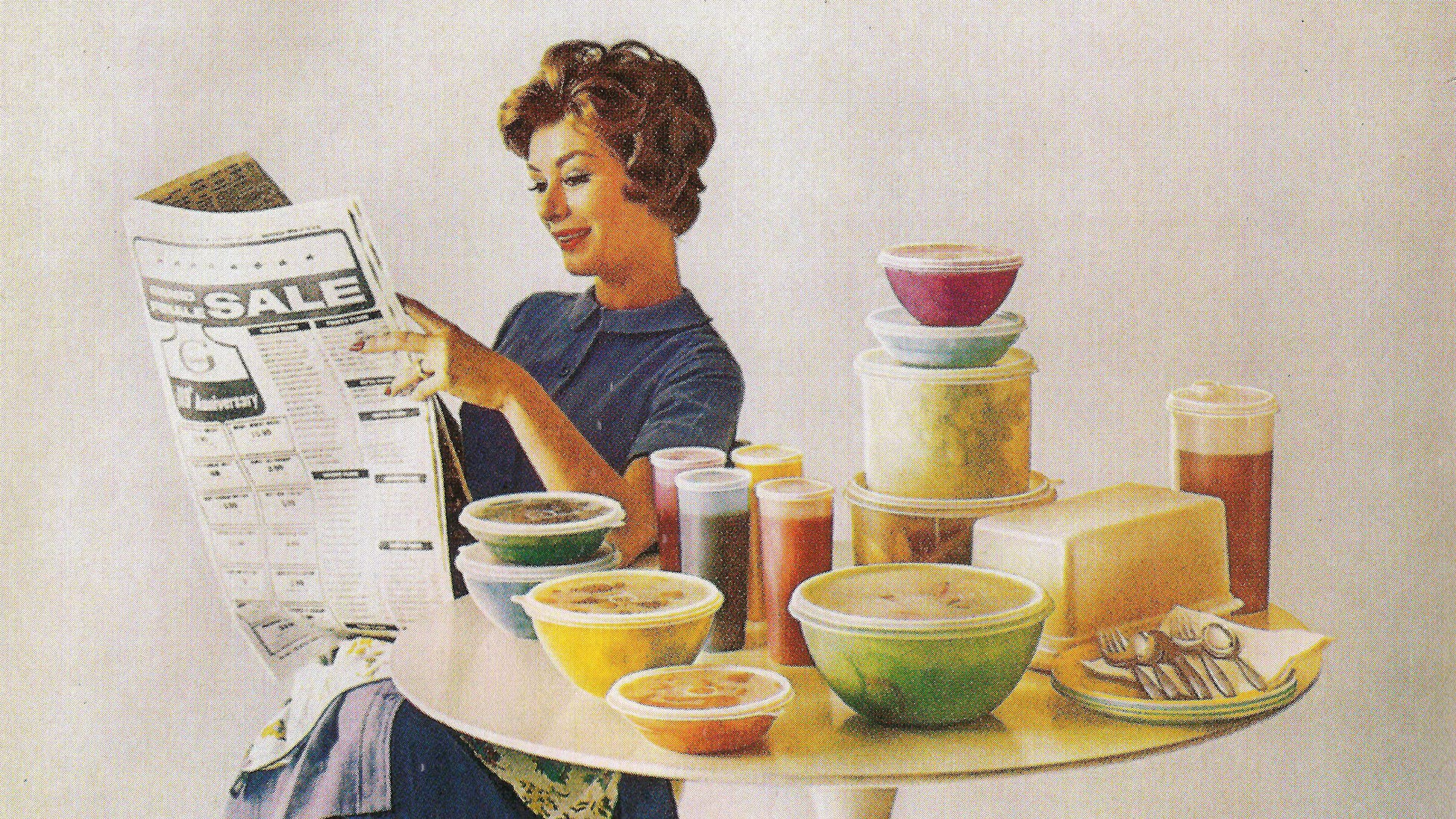
Are You Emotional Tupperware?
Tupperware was revolutionary when it first appeared. It was airtight, durable, and extremely reliable. It kept food fresh longer, traveled well, stacked neatly, and didn’t leak all over the place. The original pieces were built to last. Some of them are still in people’s kitchens decades later, lids warped just enough to show they’ve lived a life, but still sealing tight. And probably a little discolored… I mean, pasta sauce??
There’s something admirable about that kind of design. Something comforting, even. And if you’re honest, you might recognize yourself in it.
Some people are like the original Tupperware. They are well-built, dependable, and emotionally sturdy. You can put things in them and trust they won’t spill, crack, or fall apart under pressure. They’re steady in a crisis. Calm when things get messy. And they hold things together.
And to be real, these traits are usually praised. Heavily so! They become part of your identity because you’re the one people lean on. The one who can “handle it.” The one who doesn’t freak out, doesn’t need much, and the one who doesn’t make things harder.
You’re reliable. Durable. Airtight.
You see where this is going, right? Yep… you’re like Tupperware.
But you’re more than that, right?
Because Tupperware is meant to hold leftovers, not the emotional contents of everyone else’s life. It’s designed for soup and pasta and chopped fruit. Not grief, rage, or panic. Not the constant overflow of other people’s unprocessed feelings.
And yet, some people slowly become exactly that: emotional containers.
Emotional Tupperware.
Bottomless ones, sometimes. People can pour into them without checking the capacity, without asking whether the lid is already stretched thin, without noticing that the container never gets emptied or cleaned or put away.
It can happen gradually, and often quietly. Because…
You listen.
You stay calm.
You don’t interrupt.
You absorb.
You translate.
You reassure.
You make space.
And because you don’t visibly crack, people assume you won’t. Because you don’t protest, they assume you don’t mind. Because you’re good at holding things, others stop holding their own.
And let’s be clear: this dynamic isn’t something that only happens to you. You participate in it. I know, that can be a hard pill to swallow. But —
Most people who become emotional Tupperware didn’t choose it consciously. They learned it. Usually early. Maybe you grew up in a home where someone else’s emotions took up all the space, and your job was to contain them. Maybe being calm kept the peace. Maybe being steady made you useful. Maybe you learned that your value came from how much you could hold without spilling.
So you became good at it. Like, really good at it. You learned how to seal yourself shut. How to stack feelings neatly. How to keep things from leaking out. How to stay intact while everything around you was messy. Again… Tupperware.
And of course, that skill followed you. Into friendships. Into romantic relationships. Into work. Into family roles. Into rooms where people unconsciously scan for the person who can hold their stuff so they don’t have to.
Permanent Storage?
There is a subtle shift that happens when someone becomes an emotional container for others. At first, it can feel good. Meaningful, even. Being useful often does. You’re trusted and sought out. Chosen as the place where things can be set down without spilling everywhere. People bring you their thoughts, their feelings, their half-formed worries, and you help them sort through it all. You help them label things, make sense of what belongs where, and sometimes even hand things back in a more manageable form.
In the beginning, this can feel like connection.
But over time, usefulness can quietly replace reciprocity. The relationship becomes less about being seen and more about being used. Not in a cruel or intentional way, necessarily, but in a functional one. You become valuable for what you can hold rather than for who you are. Your role narrows. Your flexibility in the relationship shrinks. You’re relied on, but not always related to.
You stop being someone with play in the dynamic and become someone with a job.
And that job is storage.
Like actual Tupperware, the more a container is used, the more wear it accumulates. I mean, repeated use is bound to leaves marks. The plastic clouds. The edges soften. Lids stop sealing quite the way they used to. And the container still works, technically, but it carries the evidence of how often it has been filled, emptied, and filled again.
This happens to people, too.
The more emotional weight you’re asked to hold, the more quickly the wear can show up. Sometimes as fatigue. Sometimes as irritability you don’t recognize as your own. Sometimes as a quiet pulling back from intimacy altogether, because closeness has come to mean responsibility rather than mutual care. When you are consistently used as storage, you don’t just hold more —you change.
Now, to be fair, not all Tupperware owners are careless.
Some people do treat their containers well. They wash them by hand. They don’t microwave them until they warp. They don’t leave them in hot cars to grow something unidentifiable and deeply concerning. They use them thoughtfully, with attention to limits and longevity.
And some people do this relationally, too. They check in. They notice capacity. They don’t assume endless availability. They understand that holding something for a moment is different from holding it indefinitely.
But not everyone is that careful.
Some people lose lids. Some forget what they’ve put inside and how long it’s been there. Some shove things in the back of the fridge and act surprised when everything smells off. Some are careless. Some are overwhelmed. Some simply assume that if something has always held, it always will.
So what happens when you become Tupperware to someone like that?
Someone who offloads and never circles back. Someone who treats your capacity as permanent storage. Someone who forgets that you are a person and not an object designed to absorb their excess.
Being seen as useful can feel affirming, especially if usefulness once meant safety, belonging, or love. But over time, it can have lasting effects. When your primary value in a relationship is what you can contain, your own needs begin to feel irrelevant. Your interior life gets sidelined and your ability to say “this doesn’t fit” starts to feel disruptive rather than reasonable.
And slowly, the relationship stops feeling like a relationship at all. It can start to feel more like maintenance.
Putting the Lid Back On
Once you see the pattern, the question becomes quieter and more complicated: what do you do about it?
The first step isn’t fixing anything. It’s noticing. Learning whether you’ve become emotional Tupperware in your relationships, and if so, where and how. Not to focus on any kind of blame or self-criticism. This is about awareness and recognizing when usefulness has edged out mutuality, when holding has replaced being held, and when your presence has narrowed into function.
If you realize this is you, you might want something to shift.
That shift often feels uncomfortable at first, because it asks you to loosen a role that once kept things steady. It would ask that you be less useful in ways you’ve been rewarded for. To take up space instead of simply making space. And to let yourself be seen as someone with needs, moods, and limits, rather than someone whose job is to absorb and organize what others don’t want to carry.
For many people, this also means learning how to ask. Asking others to hold things for you, asking for care, asking for patience, and asking for room. If you’ve spent a long time being the container, this can feel unfamiliar, even risky. It might feel indulgent or awkward or like you’re breaking an unspoken contract.
But it isn’t indulgent. It’s relational.
Understanding the origins of your Tupperware journey matters here. When you know where the role came from, it becomes easier to explain why you’re trying to change it. Sometimes that means having a conversation with the people closest to you. A soft one. An open one. One that names your history, not as an accusation, but as context. One that says, this is what I learned to do to stay safe or connected, and this is what I need now if this relationship is going to remain mutual.
In the best cases, the relationship adjusts. The other person listens and really hears you. So they begin to notice their own habits and they learn how to hold things, too. And the dynamic can then widen. There is more play, more balance, more room for both people to exist fully.
But sometimes, it doesn’t.
Sometimes a role is so deeply embedded in a relationship that when it changes, the relationship can’t. Not because either person is bad or wrong, but because the structure was built around one person holding and the other emptying. When that shifts, the connection loses its footing.
There can be real grief in that. Probably even sadness and a bit of disorientation. A sense of loss for what was familiar, even if it was quietly draining. Letting go of being someone’s permanent storage can mean letting go of the relationship itself.
And something to remember… that doesn’t mean the change was a mistake.
It means you chose to reclaim yourself as a person rather than remain emotional Tupperware. You are asking yourself to step out of a role that asked too much of you, too often, and without reciprocity. And to accept that being available 24/7 is not the same as being connected. That health sometimes requires distance, redefinition, or even goodbye.
You don’t stop being capable.
You simply stop being endless. Bottomless. You stop being emotional Tupperware as a permanent job.
And in that shift, something important happens. You make room not just to hold, but to be held. Not just to function, but to exist. Not just to preserve what others bring to you, but to be seen, tended to, and cared for in return.
And that’s not selfish. I repeat… that’s not selfish! That’s relational repair.
So…
Most of us were never taught to think about emotional capacity in these terms. We were taught to be helpful, accommodating, and steady. To hold things quietly. To keep the mess contained. And for a long time, that works. Maybe it’s still working. Because it keeps relationships moving and it keeps people close. It keeps us feeling needed.
But eventually, many of us realize that being useful is not the same thing as being known, and holding everything is not the same thing as being held.
If you recognize yourself in this, it is not a flaw. It’s just history. A set of adaptations that once made sense and may still, in certain moments. The work isn’t to abandon your ability to hold, but to choose when and for whom you do it. To notice when usefulness has replaced reciprocity, and to remember that you are allowed to take up space, ask for care, and let others carry their own things.
You were never meant to be permanent storage. You were meant to be in relationship.
And sometimes, that means setting the container down, taking a breath, and choosing to show up not as Tupperware, but as a person.
Until next time…
I’m Jenn — Ordinary Therapist is where I explore the layered, often messy work of being human — things like emotional maturity, relationships, burnout, and healing — through story, reflection, and a creative lens.
If you appreciate thoughtful takes, personal insight, and the kind of honesty that makes room for both complexity and connection, you’re in the right place.
Come back, read a little, comment, subscribe, like — or just hang out. I’m just glad you’re here.
Disclaimer: The content shared on this Substack is for informational purposes only and is not intended to replace professional mental health advice, diagnosis, or treatment. Always seek the advice of your physician, therapist, or other qualified mental health provider with any questions you may have regarding a medical or psychological condition.
The views expressed in the articles and newsletters are those of the author(s) and do not necessarily reflect the views of any organizations or professionals mentioned. While every effort is made to provide accurate and up-to-date information, no guarantees are made regarding the completeness or reliability of the content.
If you are experiencing a mental health crisis or need immediate assistance, please contact a mental health professional or reach out to emergency services in your area. A list of resources is available in the “Resources” post pinned to our home page.
Brilliant piece!!!!
Although I will never look at Tupperware the same again or any other food storage container, lol!!!! Is Rubbermaid OK? Oh no, I am in trouble....
Tupperware. I used to joke that I carry a Trauma Bag for people's trauma.
Problem is, it's so easy to put it in there, they don't get to deal with it themselves.